Friday, January 27, 2017

Tuesday, January 17, 2017

Portrait Inspirations

Steve McCurry
McCurry was born in 1950 in Philadelphia, Pennsylvania. He studied film at Penn State before going to work for a local newspaper. Two years later, he went to India for freelance work. This was where he has captured most of his famous/recognizable work. He has had numerous publications and exhibitions, and has won many photography awards. He shot on film until 2005, where he switched over to digital for convenience.

His most famous photo-"Afghan Girl" (1984). The lighting he used is short, because the side of her face turned towards the camera is in shadow. The portrait was taken outside, with natural lighting. The photographer most likely posed the girl directly, as the photo does not look candid. Her pose (having the right side of her face in shadow) creates a dark and mysterious mood. The background and her clothing is important to the photo, because they both complement her eyes and face (where the eyes are drawn to initially). The photographer definitely did a good job at eliminating distractors and getting only the subject in the photo.

Other famous photos:


Douglas Kirkland
Kirkland was born in 1934 in Fort Erie, Ontario. At 24, he was hired as a photographer for Look Magazine. He works around the world, and has even worked for the film industry. His illustrated book, "ICONS: Creativity with Camera and Computer" was published in 1933 and consisted of 66 photos of famous Hollywood actors.

His most famous photoshoot was "In Bed with Marilyn"(1961). The lighting was very soft, and looks like it was coming from the front of the picture, probably from a window. The location was obviously inside, but used natural light, and little to no synthetic light. The way he posed the model made it look like we found her in the morning as she just woke up. He was up above the bed in this shot, probably on a ladder. The only clothing/props relevant to the photo was the white sheets and pillow. The photographer used rule of thirds. He could have had her lie in the middle of the bed, but he placed her off center.

Other famous photos:


Greg Gorman
Gorman was born in 1949 in Kansas City, Missouri. He studied photojournalism at the University of Kansas and completed his studies at the University of Southern California in 1972. He only became interested in portraiture in the 1970s, after taking a series of photos at a rock concert in the late 1960s. He is known for taking photos of almost every famous celebrity. His style of portrait is a moody black and white, with harsh lighting and shadows. His books, Greg Gorman, Volume One, Inside Life, and In Their Youth: Early Portraits, showcase his personality portraits, works from 1968-1996, and unpublished works, respectively. 

One of his most famous photos is "Andy Warhol" (1985). The lighting is split, hard, lighting that creates a large shadow over the right side of his face. The photo was most likely taken in a studio, because the lighting is so particular and the background is plain. The photographer had the model face the camera straight on, as to create a more dramatic photo. The sunglasses and jacket are important to the picture because it helps sell the mood of the photo. 

Other famous photos:


Tuesday, January 10, 2017

File Formats

Three advantages of a RAW file: Lossless data, more control in editing the photo post shot, and an uncompressed file.
One disadvantage of a RAW file: produces a very large file, so if you don't have a memory card that holds a lot of space you will be limited in how many pictures you can take
Three advantages of a JPEG file: sharper and higher in contrast, immediately suitable for printing and sharing, not (usually) in need of correction.
One disadvantage of a JPEG file: some color and resolution are lost when processed by camera.

1. A RAW file captures and retains all the data from a photo without compressing it
2. White balance, contrast, highlights, shadows, colors, and saturation
3. Some cameras cannot shoot in RAW, and RAW files take up a lot of space
4. Most professional photographers edit and enhance their photos

1. I have used JPEG
2. A raster image is made up of pixels, while a vector image is made up of paths. Raster images don't retain their appearance as size increases, while vector images do.

.jpeg
1. lossy
2. everyday use
3. yes

.tiff
1. can be lossy or lossless, depending on technique chosen for storing pixels
2. printing
3. no

.psd
1. lossless
2. photoshop??
3. no

.dng
1. lossless
2. ?? all of the above?
3. yes


Friday, January 6, 2017

Famous Paintings

Sick Bacchus (Self-portrait as Bacchus), 1592/93 by Caravaggio
1. The light is coming from the left side, and looks like broad lighting
2. Because his whole left side is lit, I can use a tall window for natural light
3. Some grapes and (peaches?) and a crown made of leaves. 
4. I will need a white sheet to act as a toga
5. I can use my friend Olivia, as she has dark hair that we can tie up, or (if it works out) I can use my cousin who looks very similar to this. 
6. I will need a table and a dark background (I can probably use a black sheet) and I need to make sure the positioning of the body is correct.
7. The lighting will be hard, the background may be, and getting the toga to look good will be a challenge. 

*****This one depends on if I can get the location
Dancers Practicing at the Barre, 1877 by Degas
1. The lighting is coming from the right corner of the painting, because their shadows are casted a bit to the left. 
2. I can probably just use the lights already in the studio, because they are at the front wall. 
3. I will need a studio (duh) and a watering can. 
4. I will need 2 romantic-style ballet costumes (that I happen to already own, luckily enough), pointe shoes (also already own), and some black ribbon to use as chokers. 
5. My two friends who take ballet with me will be good models.
6. I need to make sure the poses of the models are accurate, and that I include the watering can in the photo. 
7. The location will be  hard because my studio is often having classes and I don't know if I will have the opportunity to be able to take the photo, and the costuming and shadows might be tricky. 

Camille (The Woman in the Green Dress), 1866 by Monet
1. The lighting looks like its coming from either the left side or front. 
2. I can use the same tall window I'll use in the first photo to recreate this one also. 
3. I will need a black background (I can probably use the same set as the first one)
4. My mom has a vintage green dress that looks very similar to this (what a coincidence), so I already have that taken care of. 
5. I will use my mom as the model.
6. I need to pose her correctly, and make sure the entire train of the dress is in the photo. 
7. Same with the first photo, the background and lighting may be hard, and posing the subject could pose a challenge.                         


If I am not able to use my dance studio to take the second pic, I will probably recreate this one 
     Kizette in Pink, 1926 by Lempicka
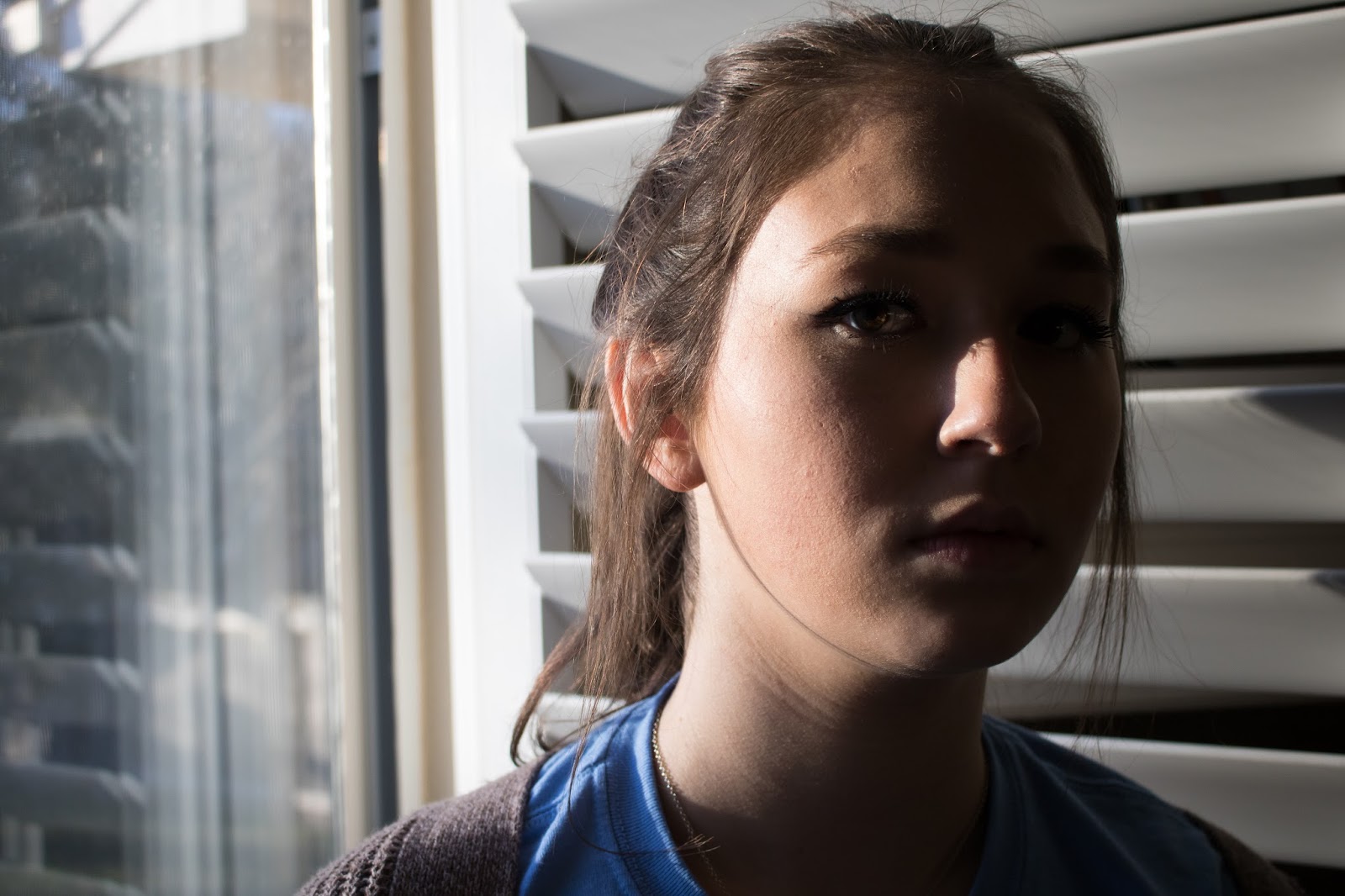


Tuesday, December 13, 2016

Tales by Light

     My favorite photographer from the Tales by Light series was Richard I’Anson from the “Himalaya” episode. I really liked how he got right into the action when shooting the various festivals and rituals, and how he was respectful to the people and environment he was shooting. The pictures of Holi were absolutely beautiful. They were so colorful, vibrant, and really told the story of the festival. Some of his best photos from the day were those that were taken when he went down into the colorful chaos to shoot from the perspective of the people celebrating Holi. That marked him as a truly great photographer, as he was willing to do whatever it took to get the shot that really captured the event. I also liked how when he was shooting the temples up in the mountains he was very respectful to the monks (?) and did not bother or alter the environment. Because I don’t enjoy when photographers manipulate scenes just for their own benefit, I liked how Anson made the environment work for him.
     One of my favorite locations/events that was photographed was the tribes in Africa and New Guinea. It was cool being able to see the people in their natural lands, photographed with the intent to document the culture of the tribes. Being able to preserve the history of such a precious culture in photographs is extremely important for not only the tribes themselves, but for other people of the world. Western society is influencing the thousands of years old traditions of these tribes in remote places more and more now (as seen through this episode, namely, by photography), but this episode shows that that might not always be a bad thing. People who view these photos are more likely to appreciate the rich and diverse world of cultures that are often hidden from view.
     My other favorite location shot was Antarctica. This episode was cool because while I probably will never be able to go to Antarctica (unfortunately), I was able to sort of live through this photographer as he shot the beautiful, icy, landscapes.
     I learned several things from the photographers. One was that the best way to get good photos is to get right in the action, and not be afraid of ~polite~ intrusion. Most of the photographers were very good at just hopping right into their environment, probably because they are professionals, but still. Another thing I learned is to not stop shooting until you get the shot you want. Art Wolfe never let anything set him back, and would go back to the same spot several days in a row (or shoot for hours on end) to get the perfect picture. It was nice to see that even the best photographers don’t get everything right on their first try. I also liked how the photographers explained everything they were doing to the audience, so I was able to pick up a few techniques from them.
     I was initially surprised at how remote, harsh, and chaotic the environments the photographers shot in were. I personally don’t know if I’d be able to capture amazing, even decent, pictures atop a mountain, under the sea, five feet from wild lions, or with colorful water spraying at me from all sides, so props to the photographers for running headfirst into tricky photography environments. I wasn’t surprised by much else, as I was too busy watching, in awe,  the very good photographers take very good photos.
     Overall, I really enjoyed watching this mini-series. I not only learned a lot from the photographers, but I am totally inspired now to go out and take amazing pictures. Seeing such beautiful landscapes and cultures captured through photo and presented by video left me longing for the experiences shown in these few episodes.


Odyssey Magazine Pictures


Thursday, December 8, 2016